The 3 KPIs every studio owner should track
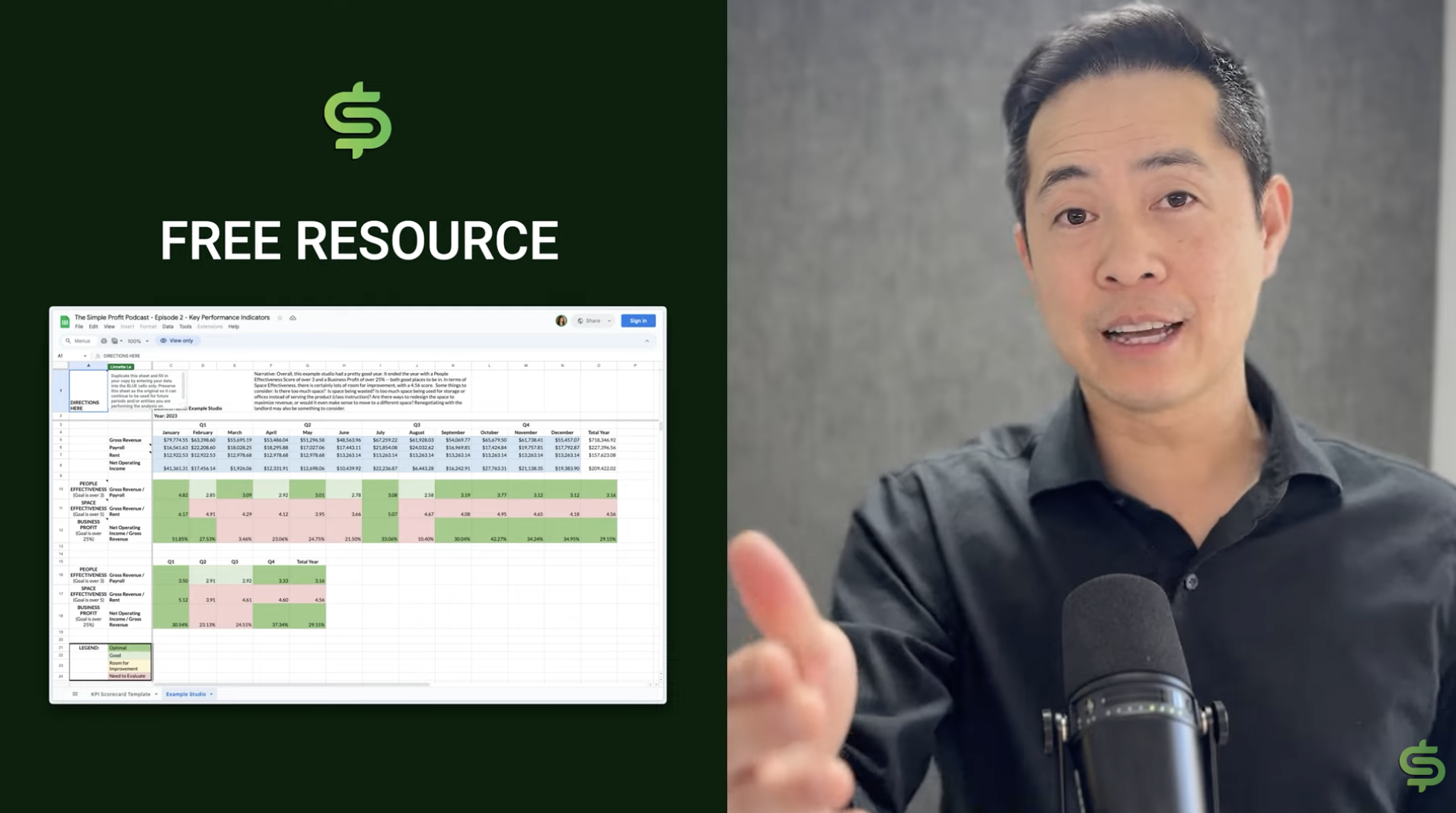
Tu Le shares the 3 KPIs he checks on all six of his schools every quarter, and why a school can bring in $1 million and still net only $60,000 without them. This post breaks down each one, includes a free worksheet to calculate your own numbers, and links to the full podcast episode, where Tu also covers rent negotiation, staffing, and how to know if you're ready to open a second location.



Why "a million-dollar school" doesn't mean what you think
Many school owners measure their business by one number: gross revenue. Tu Le, co-founder of MyStudio, used to do the same thing, until he did the math on a school he ran that pulled in $1.3 million a year in the early 2000's.
"I would go to seminars and say, 'we have a million-dollar school.' But if you have a million-dollar business and you spend $940,000 getting there, the take-home is $60,000. It sucks."
— Tu Le, Co-Founder, MyStudio
Tu now runs 5 schools averaging $1M each in revenue, at 30% net + a brand new school they just opened. The difference between these new schools and the early 2000's one isn't luck or a bigger location. It's three numbers he checks every quarter, and he shares the exact formulas, along with a free worksheet, in Episode 2 of the Simple Profit Podcast.
≥ 3
People Effectiveness Ratio
≥ 5
Rent Effectiveness Ratio
≥ 30%
Net Profit Ratio
Watch the episode
Tu walks through all three KPIs in detail, plus rent negotiation, how to know if you're overpaying (or underpaying) your team, and how to tell if you're actually ready to open a second location.
Video: The 3 KPIs to Determine Your Business Health
In this episode
1:01 Welcome to the Simple Profit Podcast
1:18 Understanding Key Performance Indicators (KPIs)
3:18 KPI #1 — People Effectiveness Ratio
16:59 KPI #2 — Rent Effectiveness Ratio
23:41 KPI #3 — Net Profit Ratio
28:16 Conclusion and final thoughts
Grab the official free resource for this episode, the full worksheet plus Tu's rent negotiation notes, straight from the source.
If any of these numbers came back lower than you'd like, you're not alone; it's the reason this episode exists. Watch the full breakdown above for exactly how Tu moved his own schools from the first example to the second, including the rent negotiation conversation that changed one location's numbers overnight.